International Institute for Sport History |
|
under section 501(c)3 of the Internal Revenue Code and is organized to operate a Library and Museum devoted to the History of Sport, Physical Education, Recreation, Dance, Sport in Art and the Olympic Games. Donations are tax deductible Federal Tax ID# 41-2041155 |
GYMNASTICS
~
Developing the IISOH Gymnastics Collection
&
IISOH Gymnastics Endowment
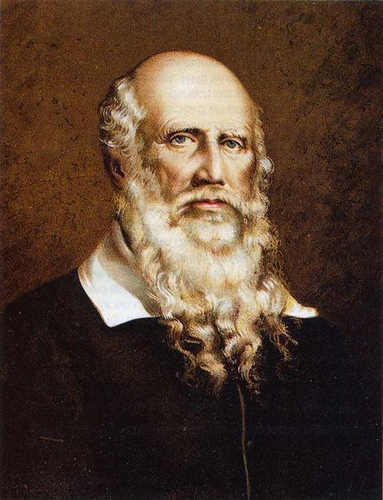
Portrait of Friedrich Ludwig Jahn, German educator
considered to be the "father of gymnastics."
Lithograph by Georg Ludwig Engelbach circa 1852.
The IISOH is an educational, literary and research corporation.The Institute plans to build a large Gymnastics training facility to support the educational, literary and research mission of the Institute. Our facility will be unique in the nation because it will serve as both a museum for the history of the sport and also as a modern training facility with the newest and best available equipment. 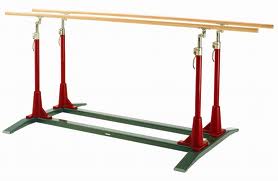 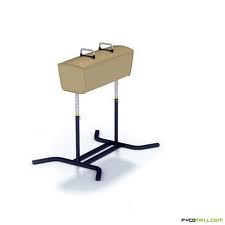 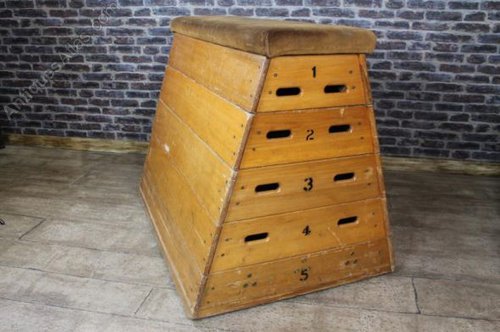 The intention is to use this facility for multiple purposes: - to conduct and support scholarly research in the arts and humanities as it relates to Gymnastics, - to increase public awareness and appreciation in the arts and humanities as it relates to Gymnastics, - to educate school children and the public in general about the historical, social and cultural aspects of Gymnastics, - to publish academic works on the topic of Gymnastics and - to organize other activities which supports these objectives. 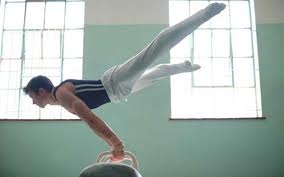 The IISOH plan includes an educational program to teach and to train athletes for elite competition. |
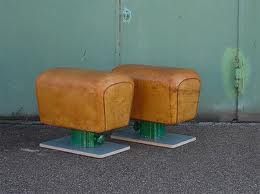 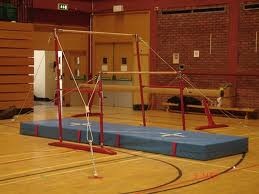 The IISOH Library seeks to acquire every book that has ever been printed on the sport of gymnastics in every language of the world. The early material is in German because gymnastics originated in Germany and other European nations. The ancient Greeks also had "gymnastic" exercises and the earliest illustrations depicting this history are in books printed in the 16th century...in Latin. 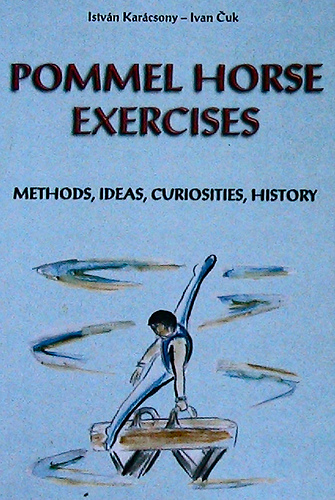
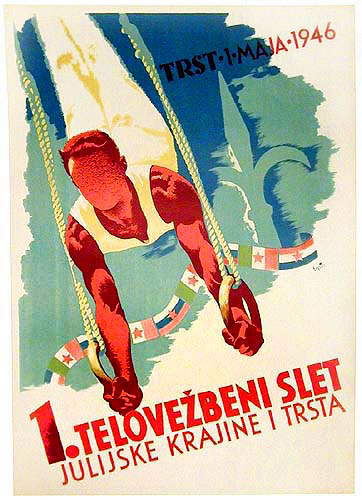
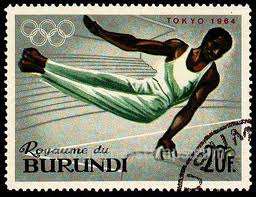
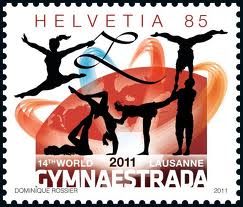
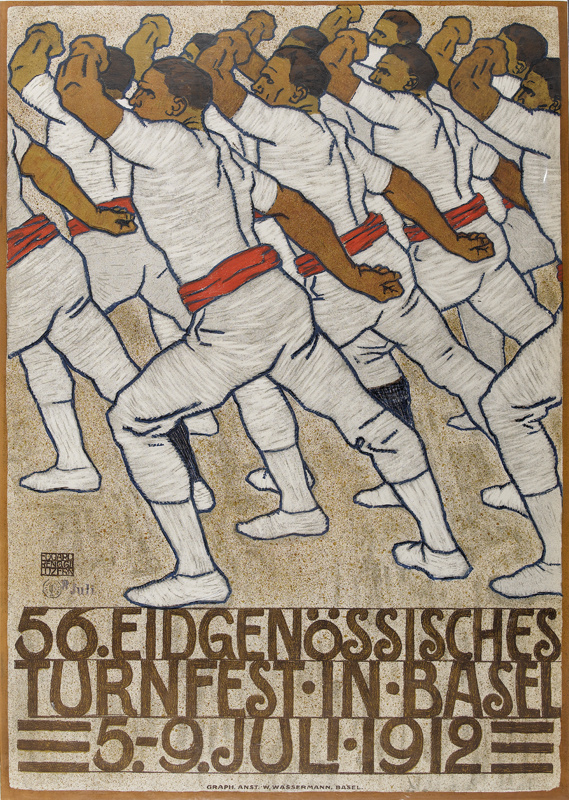
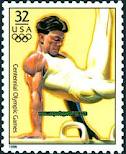
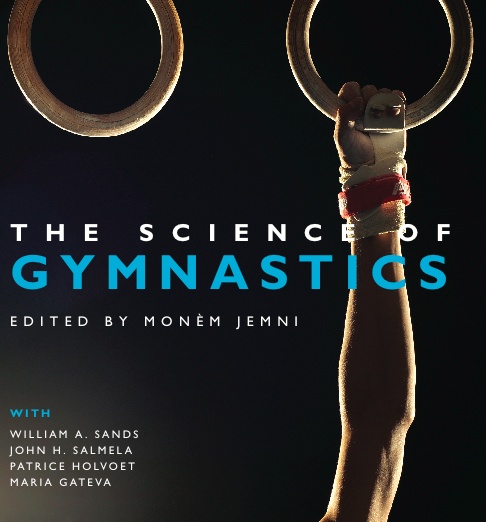 Items that are desired for the Museum collection include posters, original artwork in all media, films, stamps and coins, uniforms and all types of gymnastics apparatus and other memorabilia. 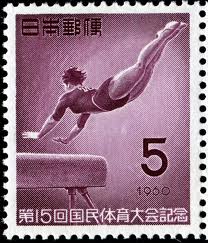 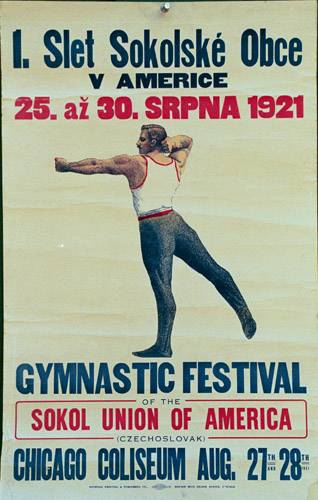 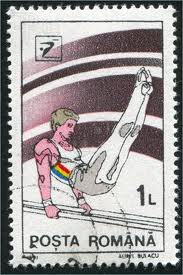 |
IISOH GYMNASTICS POSTER
|
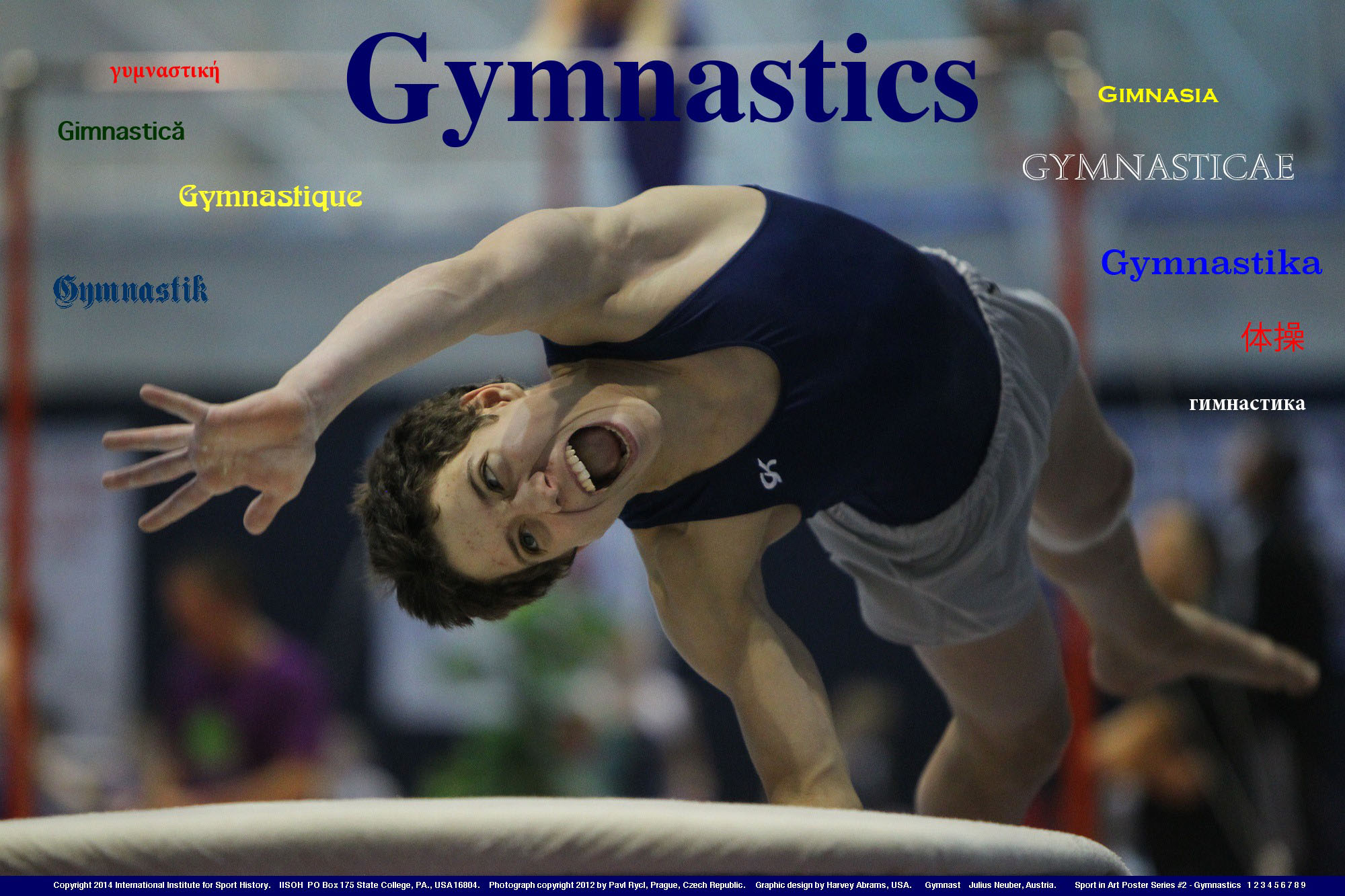
See the YouTube Video (slideshow) that was created in honor of the young gymnast who served as our first "poster boy," Julius of Austria.See our YouTube Video (Slideshow) that was created as a test to promote the sport of GYMNASTICS |
|
|
IISOH GYMNASTICS ENDOWMENT
|
|
with only the quarterly earned interest being used for the endowment purpose. |
For more details about the comprehensive IISOH endowment program,
please click here
YOU can help to develop the Gymnastics collection...
|
MONETARY DONATIONS:and are gratefully appreciated The Board of Directors would like to thank ALL donors for their support. Every donation over $25.00 will be recognized permanently with a LIFETIME ACKNOWLEDGEMENT in our publications and/or web site pages. Donations over $250 will be honored by the Board of Directors with an engraved brick to be placed on the patios or walkways that will surround the cafe and sculpture gardens. Larger donations will be acknowledged with larger plaques in marble, stone or bronze and displayed on designated walls of honor inside or outside the buildings in accordance with the instructions of the Board of Directors. YOU can support the GYMNASTICS collection today. Become a CHARTER MEMBER with a single donation of $25.00 or more....a once-in-a-lifetime donation....we will never ask for a second donation. We are grateful for your first donation...and we ask you to recruit two friends to donate also. Become a Charter Member... |

MATERIAL DONATIONS: |
|
Examples of desirable donations to the IISOH LIBRARY:
|
Examples of desirable donations to the IISOH MUSEUM:
|
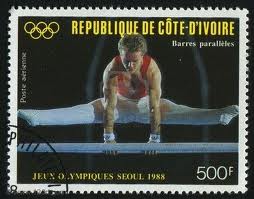

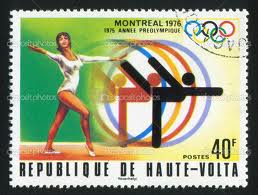
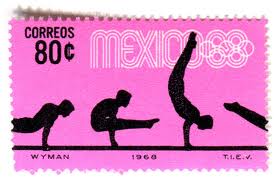
Have you ever wanted to do handstands and flips?
Eager to learn new skills and build great strength and flexibility?
Then watch this video hosted on Youtube and be INSPIRED to join a club.
Produced by ehm.cz of Prague, Czech Republic and inspiring to Gymnastics worldwide.
|
However the British educational system emphasized character building with sports such as rugby. American education leaned towards the British version and concentrated on playing games and team sports with an emphasis on competition. Hence -- gymnastics did not gain popularity in the USA until the mid-20th century. Gymnastics took a huge leap in popularity when Olga Korbut (photo below), of the Soviet Union, won the hearts of fans worldwide with her magnificent performance in the 1972 Munich Olympic Games. 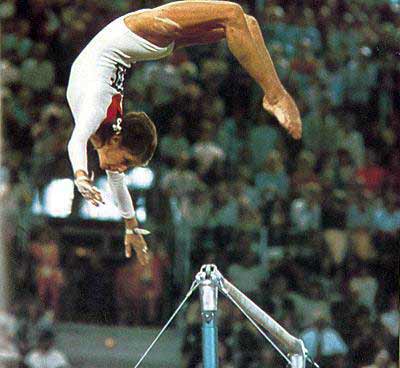 Then in 1976 a Rumanian athlete, Nadia Comaneci, (photo below) thrilled the world with her perfect performances at the Montreal Olympic Games. 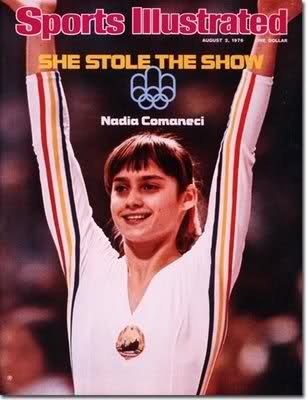 The sport became immensely popular with clubs and camps established all over the USA. But in the late 1990's participation declined as schools began to cut athletic team budgets in order to field more women's athletic teams such as softball. Intercollegiate competition dropped dramatically as dozens of universities dropped the sport in order to save money. Today gymnastics is a strong club sport and one of the most popular events in the Olympic Games.  The IISOH intends to help promote the sport of gymnastics both in the USA and worldwide. GYMNASTICS is a great sport to teach both kids and adults how to use their body in space, how to build strength and how to increase flexibility. The skills that are learned in GYMNASTICS can be adapted to every other activity...so it is a great sport to start with as a child. AND...GYMNASTICS is an activity that can be practiced for a lifetime. Gymnastics should be part of every physical education program in every school from grades kindergarten through 6, and continued in later grades as part of a comprehensive sports program. |
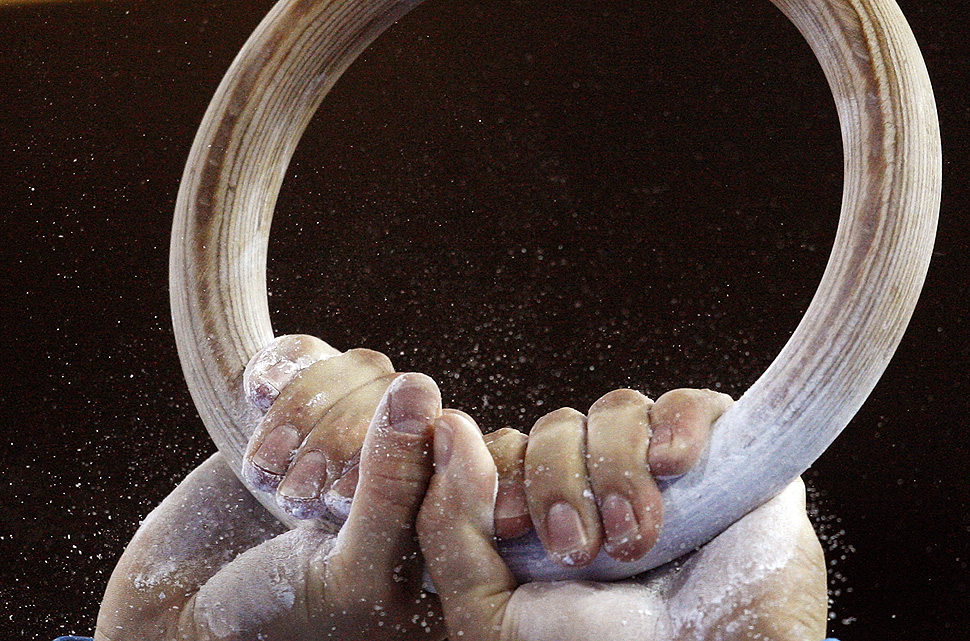
The Institute's long-term goal is to develop the most comprehensive gymnastics research collection in the world.
Please donate generously to this project - either with books or cash for the endowments.

The IISOH is a Pennsylvania Non-profit |
- IISOH Front Page
- Read the Articles of Incorporation here
- Read the BYLAWS here
- Meet the Board of Directors here
-
Become a CHARTER MEMBER or send a donation now
- Building plans
- Endowment Program
 Mr. Harvey Abrams, President International Institute for Sport History (IISOH) PO Box 175 State College, PA, USA 16804 via email: HAbrams@iisoh.org 
via telephone: (814) 321-4018 |